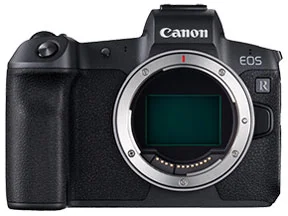
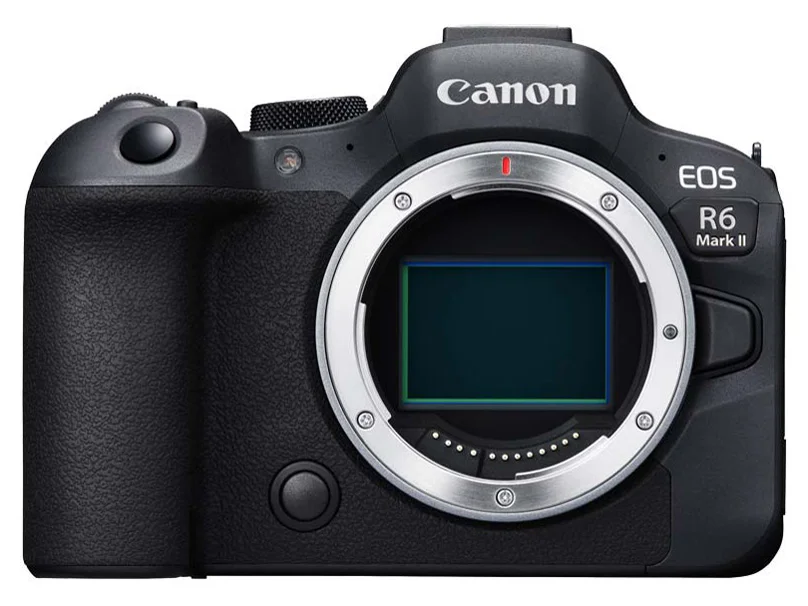
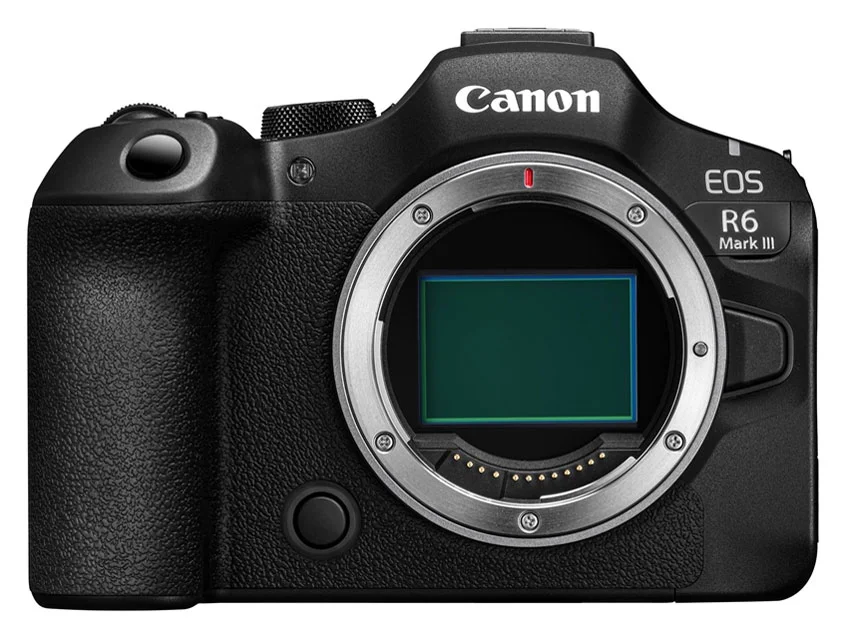
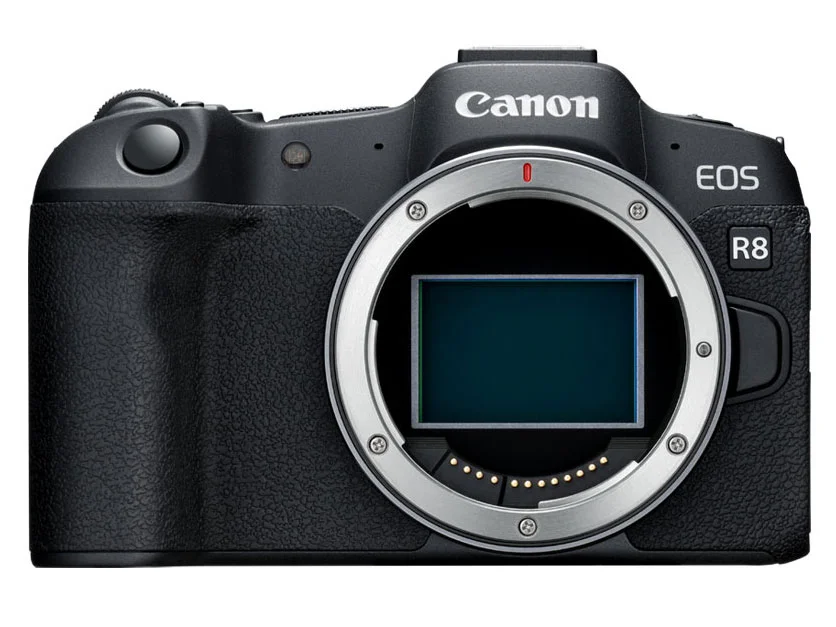
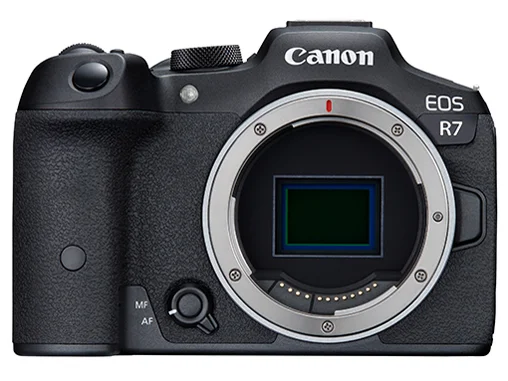
Canon EOS R vs Canon EOS R6 Mark II
The bottom line
Same line, different generation: the Canon EOS R6 Mark II (2022) moves ahead on burst speed (40fps vs 8fps), 4K frame rate (60p vs 25p) and in-body stabilisation. If those newer features aren't ones you'll actually use, the Canon EOS R gives you most of the experience for less.
Choose the Canon EOS R6 Mark II if…
- ✓You shoot action, sports or wildlife — 40fps burst plus dedicated subject-tracking AF keeps up with fast, erratic movement where 8fps would drop frames.
- ✓You shoot video seriously — it brings smoother 60p 4K vs 25p, 10-bit internal colour, Log for gradable footage, no per-clip recording limit (vs a 29-min cap) and both mic and headphone jacks for monitored audio.
- ✓You shoot handheld — in-body stabilisation lets you use slower shutter speeds and steadies video, which the other body can't do without a stabilised lens.
- ✓You vlog or shoot handheld solo — the fully-articulating screen flips to face you and there's a mic input for clean audio.
Where they differ
- ›Burst: the Canon EOS R6 Mark II shoots 40fps to the Canon EOS R's 8fps — the gap that decides whether you nail the peak moment in sports and wildlife.
- ›Video: the Canon EOS R6 Mark II is the stronger video tool — 4K up to 60p, 10-bit internal and Log.
- ›Price: the Canon EOS R6 Mark II launched at $1,999, $300 under the Canon EOS R — money that could go toward glass.
- ›Stabilisation: only the Canon EOS R6 Mark II has in-body IS — slower handheld shutter speeds and steadier video without relying on stabilised lenses.
- ›Card slots: the Canon EOS R6 Mark II has dual slots for instant backup — the reliability paid work depends on.
- ›Durability: the Canon EOS R6 Mark II is weather-sealed against dust and rain; the other isn't.
Frequently asked
Is the Canon EOS R or the Canon EOS R6 Mark II better?
Same line, different generation: the Canon EOS R6 Mark II (2022) moves ahead on burst speed (40fps vs 8fps), 4K frame rate (60p vs 25p) and in-body stabilisation. If those newer features aren't ones you'll actually use, the Canon EOS R gives you most of the experience for less.
Who should choose the Canon EOS R6 Mark II?
Choose the Canon EOS R6 Mark II if you shoot action, sports or wildlife — 40fps burst plus dedicated subject-tracking AF keeps up with fast, erratic movement where 8fps would drop frames. Choose it if you shoot video seriously — it brings smoother 60p 4K vs 25p, 10-bit internal colour, Log for gradable footage, no per-clip recording limit (vs a 29-min cap) and both mic and headphone jacks for monitored audio. Choose it if you shoot handheld — in-body stabilisation lets you use slower shutter speeds and steadies video, which the other body can't do without a stabilised lens. Choose it if you vlog or shoot handheld solo — the fully-articulating screen flips to face you and there's a mic input for clean audio.
What is the main difference between the Canon EOS R and the Canon EOS R6 Mark II?
Burst: the Canon EOS R6 Mark II shoots 40fps to the Canon EOS R's 8fps — the gap that decides whether you nail the peak moment in sports and wildlife.
| Product | ||
|---|---|---|
| Imaging | ||
| Sensor Type | CMOS | CMOS |
| Sensor Size | Full-Frame | Full-Frame |
| Image Processor | DIGIC 8 | DIGIC X |
| Effective Resolution | 30.3 MP | 24.2 MP |
| Lens Mount | Canon RF | Canon RF |
| Exposure Control | ||
| ISO Range (Native) | 100 – 40000 | 100 – 102400 |
| ISO Range (Extended) | 50 – 102400 | 50 – 204800 |
| Mechanical Shutter | 1/8000 | 1/8000 |
| Electronic Shutter | − | 1/16000 |
| Flash Sync Speed | 1/200 | 1/250 |
| Built-in Flash | No | No |
| Still Image Capture | ||
| Continuous Shooting | 8 fps | 40 fps |
| Video Capture | ||
| Max Resolution | 4K | 4K |
| 8K Recording | − | − |
| 4K Recording | Up to 25p | Up to 60p |
| 1080p Recording | Up to 60p | Up to 180p |
| 10-bit Internal | No | Yes |
| Recording Limit | 29 min | No limit |
| Log Profiles | − | Canon Log 3 / HDR-PQ |
| Built-in Mic | Stereo | Stereo |
| Headphone Jack | No | Yes |
| Mic Input | Yes | Yes |
| HDMI Output | Micro (Type D) | Micro (Type D) |
| Focus | ||
| Phase Detect Points | − | 1,053 |
| Contrast Detect Points | − | − |
| Low Light AF | − | -6.5 EV |
| Eye AF | Yes | Yes |
| Animal AF | No | Yes |
| Vehicle AF | No | Yes |
| Viewfinder | ||
| EVF Type | OLED | OLED |
| EVF Resolution | 3.69M dots | 3.69M dots |
| EVF Magnification | 0.76x | 0.76x |
| Monitor | ||
| LCD Size | 3.2" | 3" |
| LCD Resolution | 2.10M dots | 1.62M dots |
| LCD Type | Tilting | Vari-Angle Touchscreen |
| Touch Screen | Yes | Yes |
| Interface | ||
| Wi-Fi | Wi-Fi 5 | Wi-Fi 5 |
| Bluetooth | v4.2 | v5 |
| USB | USB-C 3.1 Gen 1 | USB-C 3.2 Gen 2 |
| Memory Card Slots | 1x SD UHS-II | 2x SD UHS-II |
| GPS | No | No |
| General | ||
| Price (MSRP) | $2,299 | $1,999 |
| Body Material | Magnesium Alloy | Magnesium Alloy |
| Dimensions | 135.8×98.3×84.4 mm | 138.4×98.4×88.4 mm |
| Weight | 660g (1.46 lb) | 588g (1.30 lb) |
| Weather Sealed | No | Yes |
| In-Body Stabilization | No | Yes |
| Battery Life (EVF) | 350 shots | 450 shots |
| Battery Life (LCD) | 470 shots | 760 shots |
| Battery Type | LP-E6N | LP-E6NH |