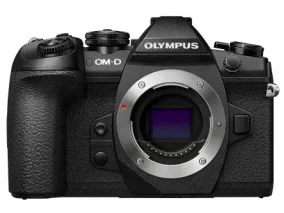
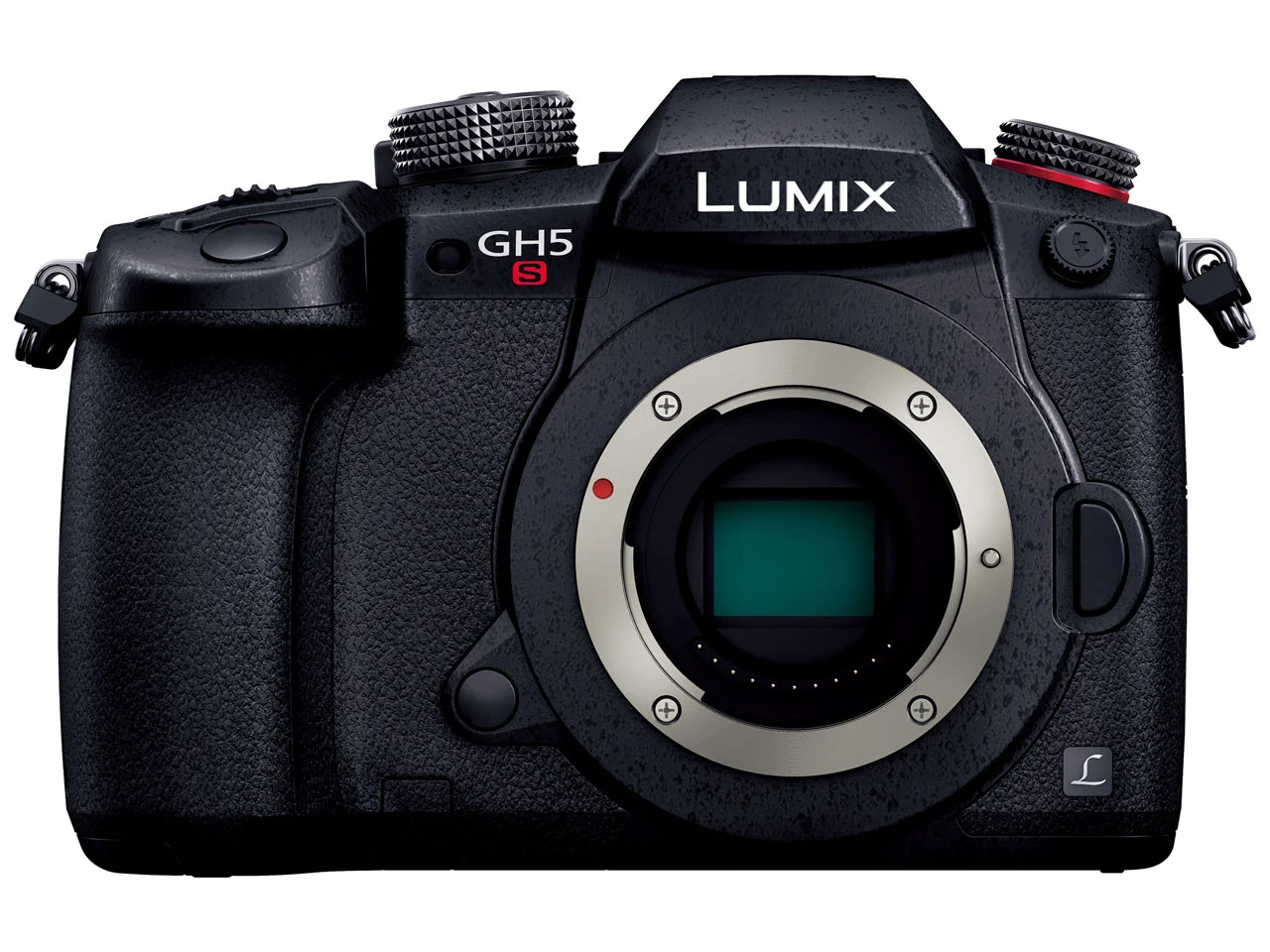
OM System OM-D E-M1 Mark II vs Panasonic LUMIX GH5S
The bottom line
These are closely matched on paper, so it comes down to emphasis. The Panasonic LUMIX GH5S leans further into video, while the OM System OM-D E-M1 Mark II is the stronger stills tool. Match the body to whichever you do more of — the differences below show exactly where each pulls ahead.
Choose the OM System OM-D E-M1 Mark II if…
- ✓You shoot action, sports or wildlife — 18fps burst keeps up with fast, erratic movement where 12fps would drop frames.
- ✓You want maximum detail for landscapes, studio or large prints — 20.4MP resolves noticeably more than 10.2MP and gives more cropping latitude.
- ✓You shoot handheld — in-body stabilisation lets you use slower shutter speeds and steadies video, which the other body can't do without a stabilised lens.
- ✓You shoot long days on one charge — rated 440 shots per battery vs 300.
Choose the Panasonic LUMIX GH5S if…
- ✓You shoot video seriously — it brings smoother 60p 4K vs 30p.
- ✓You vlog or shoot handheld solo — the fully-articulating screen flips to face you and there's a mic input for clean audio.
- ✓You shoot in low light or indoors — a higher native ISO ceiling (51,200) and AF that focuses down to -5 EV give it the edge after dark.
Where they differ
- ›Video: the Panasonic LUMIX GH5S is the stronger video tool — 4K up to 60p, 10-bit internal and Log.
- ›Price: the OM System OM-D E-M1 Mark II launched at $1,999, $498 under the Panasonic LUMIX GH5S — money that could go toward glass.
- ›Resolution: 20.4MP on the OM System OM-D E-M1 Mark II vs 10.2MP — more detail and crop room, at the cost of larger files.
- ›Stabilisation: only the OM System OM-D E-M1 Mark II has in-body IS — slower handheld shutter speeds and steadier video without relying on stabilised lenses.
- ›Weight: the OM System OM-D E-M1 Mark II is 574g (1.27 lb) vs 660g (1.46 lb) — 86g you'll feel on a long day out.
- ›Burst: the OM System OM-D E-M1 Mark II shoots 18fps to the Panasonic LUMIX GH5S's 12fps — the gap that decides whether you nail the peak moment in sports and wildlife.
Frequently asked
Is the OM System OM-D E-M1 Mark II or the Panasonic LUMIX GH5S better?
These are closely matched on paper, so it comes down to emphasis. The Panasonic LUMIX GH5S leans further into video, while the OM System OM-D E-M1 Mark II is the stronger stills tool. Match the body to whichever you do more of — the differences below show exactly where each pulls ahead.
Who should choose the OM System OM-D E-M1 Mark II?
Choose the OM System OM-D E-M1 Mark II if you shoot action, sports or wildlife — 18fps burst keeps up with fast, erratic movement where 12fps would drop frames. Choose it if you want maximum detail for landscapes, studio or large prints — 20.4MP resolves noticeably more than 10.2MP and gives more cropping latitude. Choose it if you shoot handheld — in-body stabilisation lets you use slower shutter speeds and steadies video, which the other body can't do without a stabilised lens. Choose it if you shoot long days on one charge — rated 440 shots per battery vs 300.
Who should choose the Panasonic LUMIX GH5S?
Choose the Panasonic LUMIX GH5S if you shoot video seriously — it brings smoother 60p 4K vs 30p. Choose it if you vlog or shoot handheld solo — the fully-articulating screen flips to face you and there's a mic input for clean audio. Choose it if you shoot in low light or indoors — a higher native ISO ceiling (51,200) and AF that focuses down to -5 EV give it the edge after dark.
What is the main difference between the OM System OM-D E-M1 Mark II and the Panasonic LUMIX GH5S?
Video: the Panasonic LUMIX GH5S is the stronger video tool — 4K up to 60p, 10-bit internal and Log.
| Product | ||
|---|---|---|
| Imaging | ||
| Sensor Type | Live MOS | Digital Live MOS |
| Sensor Size | Micro Four Thirds | Micro Four Thirds |
| Image Processor | TruePic VIII | Venus Engine |
| Effective Resolution | 20.4 MP | 10.2 MP |
| Lens Mount | Micro Four Thirds | Micro Four Thirds |
| Exposure Control | ||
| ISO Range (Native) | 200 – 25600 | 160 – 51200 |
| ISO Range (Extended) | 64 – 102400 | 80 – 204800 |
| Mechanical Shutter | 1/8000 | 1/8000 |
| Electronic Shutter | 1/32000 | 1/16000 |
| Flash Sync Speed | 1/250 | 1/250 |
| Built-in Flash | No | No |
| Still Image Capture | ||
| Continuous Shooting | 18 fps | 12 fps |
| Video Capture | ||
| Max Resolution | 4K | 4K |
| 8K Recording | − | − |
| 4K Recording | Up to 30p | Up to 60p |
| 1080p Recording | Up to 60p | Up to 240p |
| 10-bit Internal | Yes | Yes |
| Recording Limit | No limit | No limit |
| Log Profiles | OM-Log400 | V-Log L / HLG |
| Built-in Mic | Stereo | Stereo |
| Headphone Jack | Yes | Yes |
| Mic Input | Yes | Yes |
| HDMI Output | Micro (Type D) | Full-size (Type A) |
| Focus | ||
| Phase Detect Points | 121 | 225 |
| Contrast Detect Points | − | − |
| Low Light AF | -2 EV | -5 EV |
| Eye AF | Yes | Yes |
| Animal AF | Yes | Yes |
| Vehicle AF | No | No |
| Viewfinder | ||
| EVF Type | OLED | OLED |
| EVF Resolution | 2.36M dots | 3.68M dots |
| EVF Magnification | 0.74x | 0.76x |
| Monitor | ||
| LCD Size | 3" | 3.2" |
| LCD Resolution | 1.04M dots | 1.62M dots |
| LCD Type | Tilting | Vari-Angle |
| Touch Screen | Yes | Yes |
| Interface | ||
| Wi-Fi | Wi-Fi 5 | Wi-Fi 5 |
| Bluetooth | v4.2 | v4.2 |
| USB | Micro USB 3.0 | USB-C 3.1 |
| Memory Card Slots | 2x SD (1x UHS-II) | 2x SD UHS-II |
| GPS | No | No |
| General | ||
| Price (MSRP) | $1,999 | $2,497 |
| Body Material | Magnesium Alloy | Magnesium Alloy |
| Dimensions | 134.1×91.9×66.9 mm | 138.5×98.1×87.4 mm |
| Weight | 574g (1.27 lb) | 660g (1.46 lb) |
| Weather Sealed | Yes | Yes |
| In-Body Stabilization | Yes | No |
| Battery Life (EVF) | 440 shots | 300 shots |
| Battery Life (LCD) | 440 shots | 350 shots |
| Battery Type | BLH-1 | DMW-BLF19 |