What 16mm at f/1.4 actually gives you
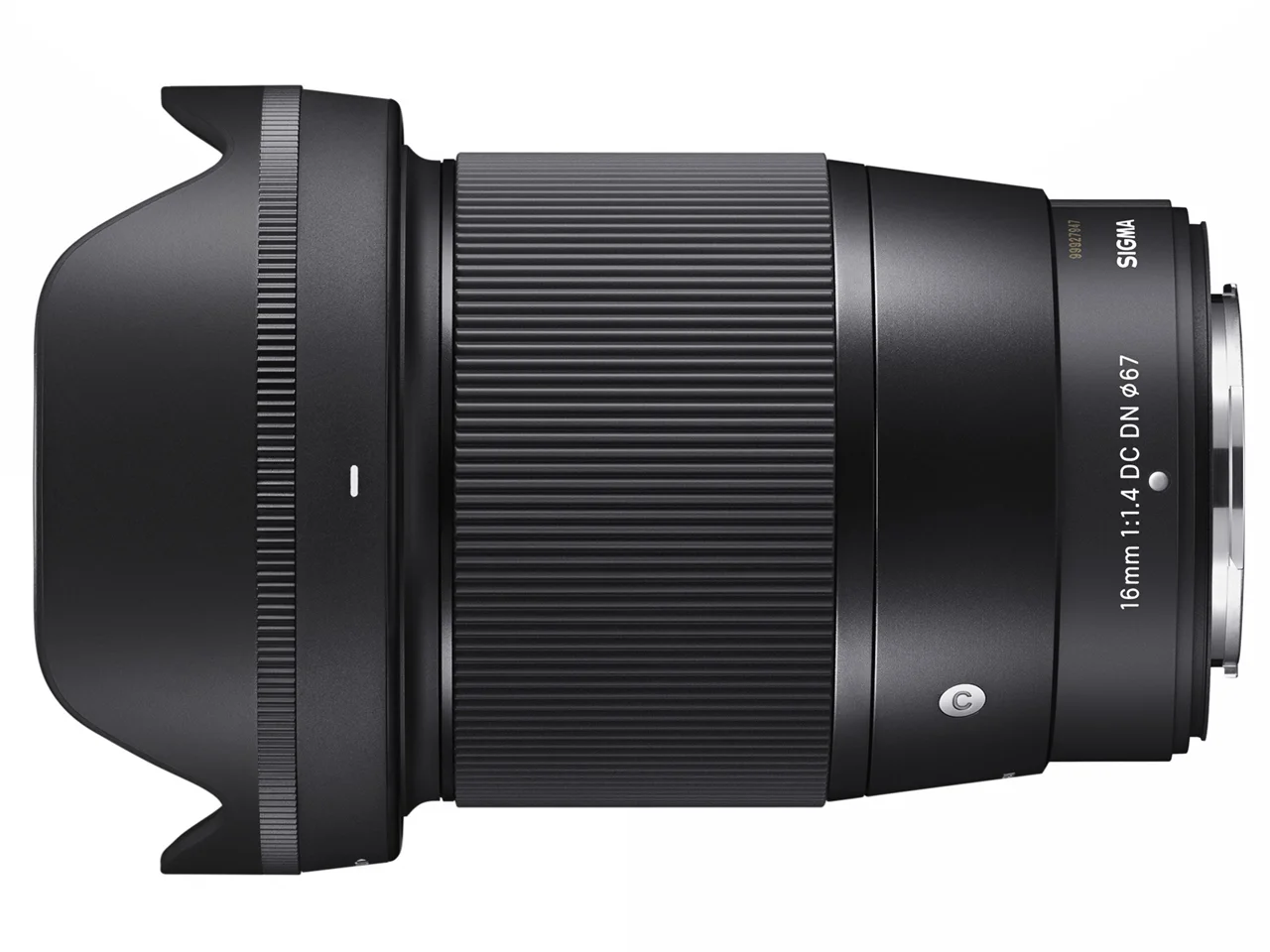
16mm is wide enough to take in interiors, landscapes and architecture without the pronounced edge stretching of an ultra-wide. On the APS-C bodies it covers, it frames like 24mm would on full-frame.
The f/1.4 maximum aperture is about as fast as production lenses get: it gathers a lot of light and throws backgrounds well out of focus, at the cost of a depth of field thin enough that focus accuracy starts to matter on close subjects.
Size, close focus and filters
At 405g (14.3 oz) it sits in the middle for handling: substantial enough to feel planted, light enough not to dominate the kit.
It focuses to 25cm, which is close enough to fill the frame with small subjects.
Filters are 67mm — worth checking against what you already own, since polarisers and ND filters at this size are reusable across any other lens sharing the thread. A dedicated aperture ring gives direct control without going through a camera dial, which mostly matters for video work.
Autofocus and stabilisation
Autofocus is driven by an HLA motor.
There is no optical stabilisation in the lens, so handheld steadiness depends on the body having IBIS, or on keeping the shutter speed up.