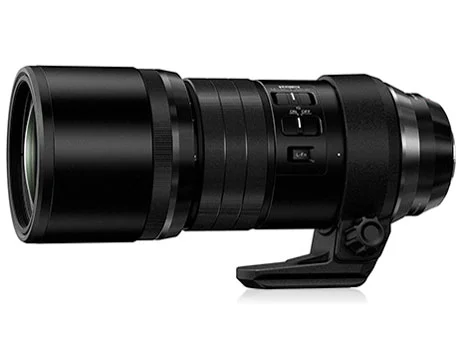
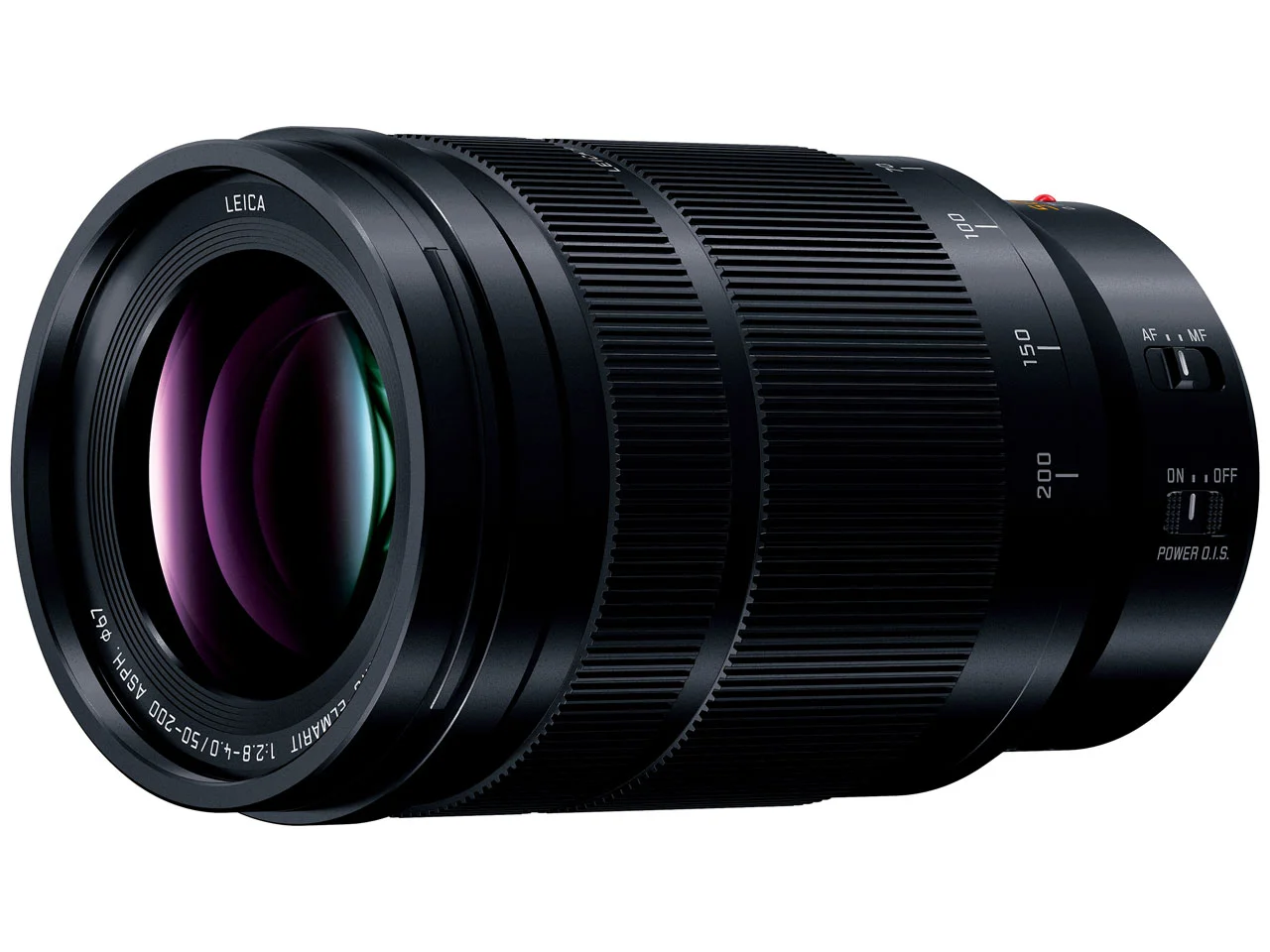
OM System M.Zuiko Digital ED 300mm F4 IS PRO vs Panasonic LEICA DG VARIO-ELMARIT 50-200mm f/2.8-4
The bottom line
These cover different focal lengths — the OM System M.Zuiko Digital ED 300mm F4 IS PRO is 300mm, the Panasonic LEICA DG VARIO-ELMARIT 50-200mm f/2.8-4 is 50-200mm — so they're not really substitutes. Pick by the field of view you actually need: the OM System M.Zuiko Digital ED 300mm F4 IS PRO for super-telephoto, the Panasonic LEICA DG VARIO-ELMARIT 50-200mm f/2.8-4 for telephoto.
Choose the OM System M.Zuiko Digital ED 300mm F4 IS PRO if…
- ✓You need more reach — it goes to 300mm vs 200mm for distant subjects, wildlife and sport.
- ✓You prefer a fast, compact single focal length — a 300mm prime over a zoom.
- ✓You like close-focus work — 0.48x magnification vs 0.24x.
Choose the Panasonic LEICA DG VARIO-ELMARIT 50-200mm f/2.8-4 if…
- ✓You want more light and background blur — f/2.8 is faster than f/4, better for low light and subject separation.
- ✓You shoot wide — it starts at 50mm vs 300mm for landscapes, interiors and architecture.
- ✓You're on a budget — $1,499 vs $2,499 leaves more for other gear.
- ✓You want one-lens flexibility — a 50-200mm zoom covers what the fixed 300mm can't reframe.
Where they differ
- ›Aperture: the Panasonic LEICA DG VARIO-ELMARIT 50-200mm f/2.8-4 opens to f/2.8 vs the OM System M.Zuiko Digital ED 300mm F4 IS PRO's f/4 — more light and shallower depth-of-field.
- ›Focal range: OM System M.Zuiko Digital ED 300mm F4 IS PRO is 300mm, Panasonic LEICA DG VARIO-ELMARIT 50-200mm f/2.8-4 is 50-200mm — different framing and reach.
- ›Type: the Panasonic LEICA DG VARIO-ELMARIT 50-200mm f/2.8-4 is a zoom (flexible framing), the OM System M.Zuiko Digital ED 300mm F4 IS PRO a prime (one focal length, usually brighter and lighter).
- ›Price: the Panasonic LEICA DG VARIO-ELMARIT 50-200mm f/2.8-4 is $1,499, $1,000 under the OM System M.Zuiko Digital ED 300mm F4 IS PRO.
- ›Close-up: the OM System M.Zuiko Digital ED 300mm F4 IS PRO reaches 0.48x magnification vs 0.24x — more for close-up and macro work.
- ›Weight: the Panasonic LEICA DG VARIO-ELMARIT 50-200mm f/2.8-4 is 655g (1.44 lb) vs 1475g (3.25 lb) — you'll feel the difference handheld.
Frequently asked
Is the OM System M.Zuiko Digital ED 300mm F4 IS PRO or the Panasonic LEICA DG VARIO-ELMARIT 50-200mm f/2.8-4 better?
These cover different focal lengths — the OM System M.Zuiko Digital ED 300mm F4 IS PRO is 300mm, the Panasonic LEICA DG VARIO-ELMARIT 50-200mm f/2.8-4 is 50-200mm — so they're not really substitutes. Pick by the field of view you actually need: the OM System M.Zuiko Digital ED 300mm F4 IS PRO for super-telephoto, the Panasonic LEICA DG VARIO-ELMARIT 50-200mm f/2.8-4 for telephoto.
Who should choose the OM System M.Zuiko Digital ED 300mm F4 IS PRO?
Choose the OM System M.Zuiko Digital ED 300mm F4 IS PRO if you need more reach — it goes to 300mm vs 200mm for distant subjects, wildlife and sport. Choose it if you prefer a fast, compact single focal length — a 300mm prime over a zoom. Choose it if you like close-focus work — 0.48x magnification vs 0.24x.
Who should choose the Panasonic LEICA DG VARIO-ELMARIT 50-200mm f/2.8-4?
Choose the Panasonic LEICA DG VARIO-ELMARIT 50-200mm f/2.8-4 if you want more light and background blur — f/2.8 is faster than f/4, better for low light and subject separation. Choose it if you shoot wide — it starts at 50mm vs 300mm for landscapes, interiors and architecture. Choose it if you're on a budget — $1,499 vs $2,499 leaves more for other gear. Choose it if you want one-lens flexibility — a 50-200mm zoom covers what the fixed 300mm can't reframe.
What is the main difference between the OM System M.Zuiko Digital ED 300mm F4 IS PRO and the Panasonic LEICA DG VARIO-ELMARIT 50-200mm f/2.8-4?
Aperture: the Panasonic LEICA DG VARIO-ELMARIT 50-200mm f/2.8-4 opens to f/2.8 vs the OM System M.Zuiko Digital ED 300mm F4 IS PRO's f/4 — more light and shallower depth-of-field.
| Product | ||
|---|---|---|
| Optical Design | ||
| Focal Length | 300mm | 50-200mm |
| Lens Type | Prime | Zoom |
| Optical Elements | 17 | 21 |
| Optical Groups | 13 | 15 |
| Aperture & Iris | ||
| Maximum Aperture | f/4 | f/2.8 |
| Minimum Aperture | f/22 | f/22 |
| Aperture Blades | 9 | 9 |
| Rounded Aperture | Yes | Yes |
| Coverage & Angle | ||
| Format Coverage | Micro Four Thirds | Micro Four Thirds |
| Lens Mount | Micro Four Thirds | Micro Four Thirds |
| Angle of View | 4° | 24° – 6° |
| 35mm Equivalent | 600-600mm | 100-400mm |
| Focus | ||
| Autofocus | Yes | Yes |
| Focus Motor | DSP | Stepping |
| Focus Limiter | Yes | No |
| AF/MF Switch | Yes | Yes |
| Min Focus Distance | 200 cm | 75 cm |
| Max Magnification | 0.48x | 0.24x |
| Stabilization & Video | ||
| Optical Stabilization | Yes | Yes |
| Aperture Ring | No | No |
| Declickable Aperture | No | No |
| Parfocal | No | No |
| Internal Zoom | No | No |
| General | ||
| Price (MSRP) | $2,499 | $1,499 |
| Filter Size | 72mm | 67mm |
| Diameter | 92.5mm | 76mm |
| Length | 227.2mm | 136mm |
| Weight | 1475g (3.25 lb) | 655g (1.44 lb) |
| Weather Sealed | Yes | Yes |
| Tripod Collar | Yes | No |