OM System M.Zuiko Digital ED 40-150mm f/4 PRO vs OM System M.Zuiko Digital ED 90mm F3.5 Macro IS PRO
The bottom line
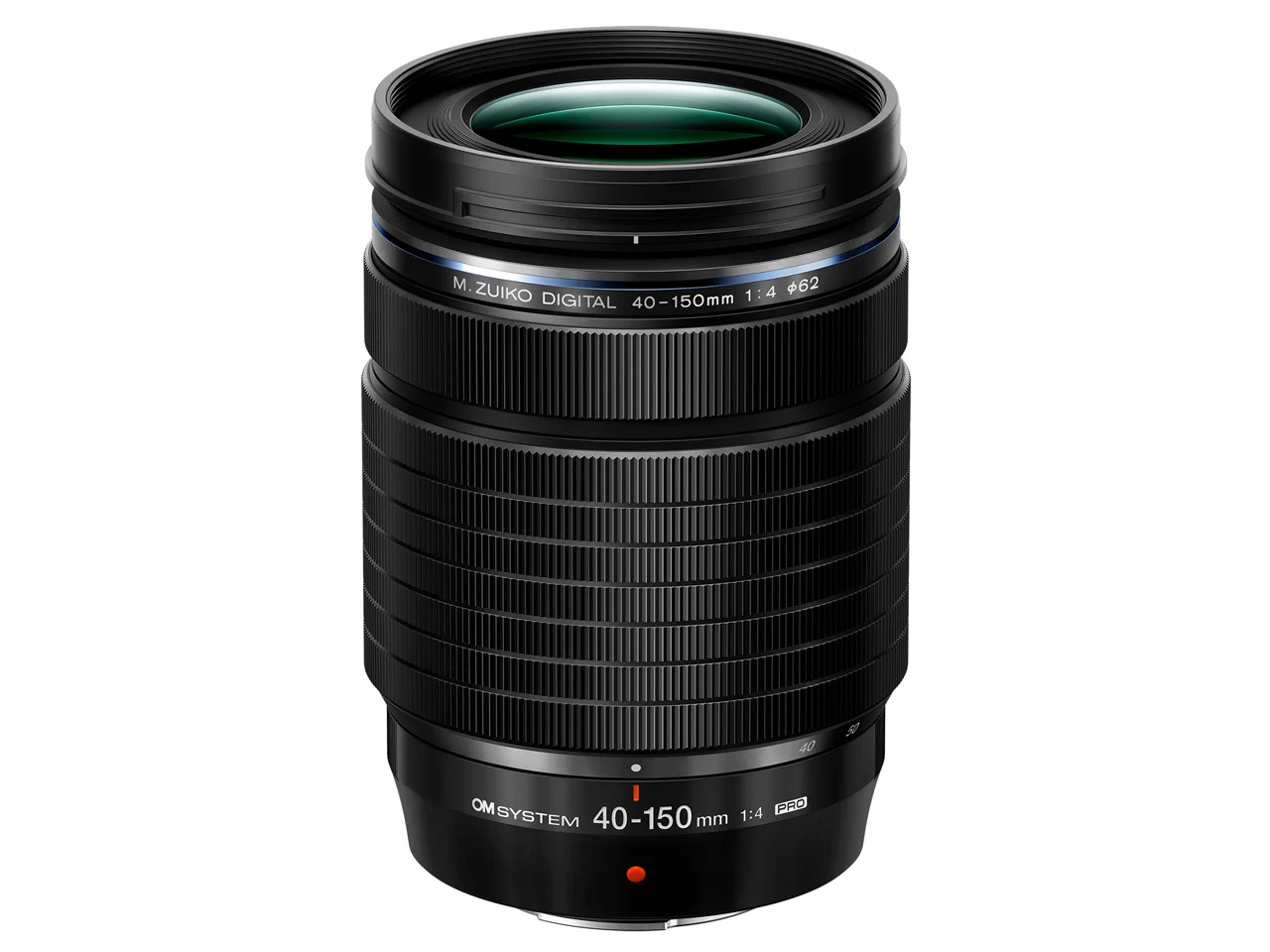
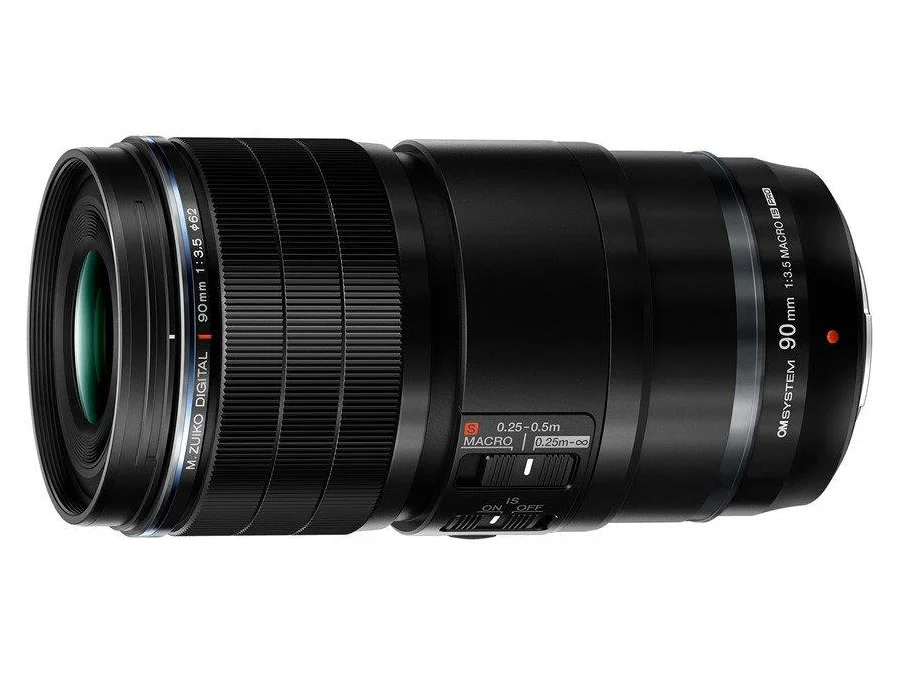
The OM System M.Zuiko Digital ED 40-150mm f/4 PRO is a zoom (40-150mm) and the OM System M.Zuiko Digital ED 90mm F3.5 Macro IS PRO is a 90mm prime. The zoom gives you framing flexibility from one lens; the prime trades that for a fixed focal length that's usually brighter (f/3.5 vs f/4) and lighter to carry. Choose flexibility or a fast single focal length.
Choose the OM System M.Zuiko Digital ED 40-150mm f/4 PRO if…
- ✓You need more reach — it goes to 150mm vs 90mm for distant subjects, wildlife and sport.
- ✓You shoot wide — it starts at 40mm vs 90mm for landscapes, interiors and architecture.
- ✓You want one-lens flexibility — a 40-150mm zoom covers what the fixed 90mm can't reframe.
Choose the OM System M.Zuiko Digital ED 90mm F3.5 Macro IS PRO if…
- ✓You shoot close-ups — 2x magnification gets you true macro the other can't.
- ✓You prefer a fast, compact single focal length — a 90mm prime over a zoom.
- ✓You shoot handheld or on an unstabilised body — it has optical stabilisation, the other doesn't.
- ✓You value portability — at 272g (9.6 oz) it's lighter than the 520g (1.15 lb) alternative for travel and all-day carry.
Where they differ
- ›Aperture: the OM System M.Zuiko Digital ED 90mm F3.5 Macro IS PRO opens to f/3.5 vs the OM System M.Zuiko Digital ED 40-150mm f/4 PRO's f/4 — more light and shallower depth-of-field.
- ›Focal range: OM System M.Zuiko Digital ED 40-150mm f/4 PRO is 40-150mm, OM System M.Zuiko Digital ED 90mm F3.5 Macro IS PRO is 90mm — different framing and reach.
- ›Type: the OM System M.Zuiko Digital ED 40-150mm f/4 PRO is a zoom (flexible framing), the OM System M.Zuiko Digital ED 90mm F3.5 Macro IS PRO a prime (one focal length, usually brighter and lighter).
- ›Stabilisation: only the OM System M.Zuiko Digital ED 90mm F3.5 Macro IS PRO has optical stabilisation — steadier handheld shots, especially on bodies without IBIS.
- ›Close-up: the OM System M.Zuiko Digital ED 90mm F3.5 Macro IS PRO reaches 2x magnification vs 0.2x — more for close-up and macro work.
- ›Weight: the OM System M.Zuiko Digital ED 90mm F3.5 Macro IS PRO is 272g (9.6 oz) vs 520g (1.15 lb) — you'll feel the difference handheld.
Frequently asked
Is the OM System M.Zuiko Digital ED 40-150mm f/4 PRO or the OM System M.Zuiko Digital ED 90mm F3.5 Macro IS PRO better?
The OM System M.Zuiko Digital ED 40-150mm f/4 PRO is a zoom (40-150mm) and the OM System M.Zuiko Digital ED 90mm F3.5 Macro IS PRO is a 90mm prime. The zoom gives you framing flexibility from one lens; the prime trades that for a fixed focal length that's usually brighter (f/3.5 vs f/4) and lighter to carry. Choose flexibility or a fast single focal length.
Who should choose the OM System M.Zuiko Digital ED 40-150mm f/4 PRO?
Choose the OM System M.Zuiko Digital ED 40-150mm f/4 PRO if you need more reach — it goes to 150mm vs 90mm for distant subjects, wildlife and sport. Choose it if you shoot wide — it starts at 40mm vs 90mm for landscapes, interiors and architecture. Choose it if you want one-lens flexibility — a 40-150mm zoom covers what the fixed 90mm can't reframe.
Who should choose the OM System M.Zuiko Digital ED 90mm F3.5 Macro IS PRO?
Choose the OM System M.Zuiko Digital ED 90mm F3.5 Macro IS PRO if you shoot close-ups — 2x magnification gets you true macro the other can't. Choose it if you prefer a fast, compact single focal length — a 90mm prime over a zoom. Choose it if you shoot handheld or on an unstabilised body — it has optical stabilisation, the other doesn't. Choose it if you value portability — at 272g (9.6 oz) it's lighter than the 520g (1.15 lb) alternative for travel and all-day carry.
What is the main difference between the OM System M.Zuiko Digital ED 40-150mm f/4 PRO and the OM System M.Zuiko Digital ED 90mm F3.5 Macro IS PRO?
Aperture: the OM System M.Zuiko Digital ED 90mm F3.5 Macro IS PRO opens to f/3.5 vs the OM System M.Zuiko Digital ED 40-150mm f/4 PRO's f/4 — more light and shallower depth-of-field.
| Product | ||
|---|---|---|
| Optical Design | ||
| Focal Length | 40-150mm | 90mm |
| Lens Type | Zoom | Prime |
| Optical Elements | 16 | 17 |
| Optical Groups | 12 | 13 |
| Aperture & Iris | ||
| Maximum Aperture | f/4 | f/3.5 |
| Minimum Aperture | f/22 | f/22 |
| Aperture Blades | 7 | 9 |
| Rounded Aperture | Yes | Yes |
| Coverage & Angle | ||
| Format Coverage | Micro Four Thirds | Micro Four Thirds |
| Lens Mount | Micro Four Thirds | Micro Four Thirds |
| Angle of View | 30° – 8° | 14° |
| 35mm Equivalent | 80-300mm | 180-180mm |
| Focus | ||
| Autofocus | Yes | Yes |
| Focus Motor | Stepping | Stepping |
| Focus Limiter | Yes | No |
| AF/MF Switch | Yes | Yes |
| Min Focus Distance | 70 cm | 13 cm |
| Max Magnification | 0.2x | 2x |
| Stabilization & Video | ||
| Optical Stabilization | No | Yes |
| Aperture Ring | No | No |
| Declickable Aperture | No | No |
| Parfocal | No | No |
| Internal Zoom | No | No |
| General | ||
| Price (MSRP) | $999 | $999 |
| Filter Size | 72mm | 62mm |
| Diameter | 78mm | 69mm |
| Length | 130mm | 136.9mm |
| Weight | 520g (1.15 lb) | 272g (9.6 oz) |
| Weather Sealed | Yes | Yes |
| Tripod Collar | No | No |