What 58mm at f/1 actually gives you
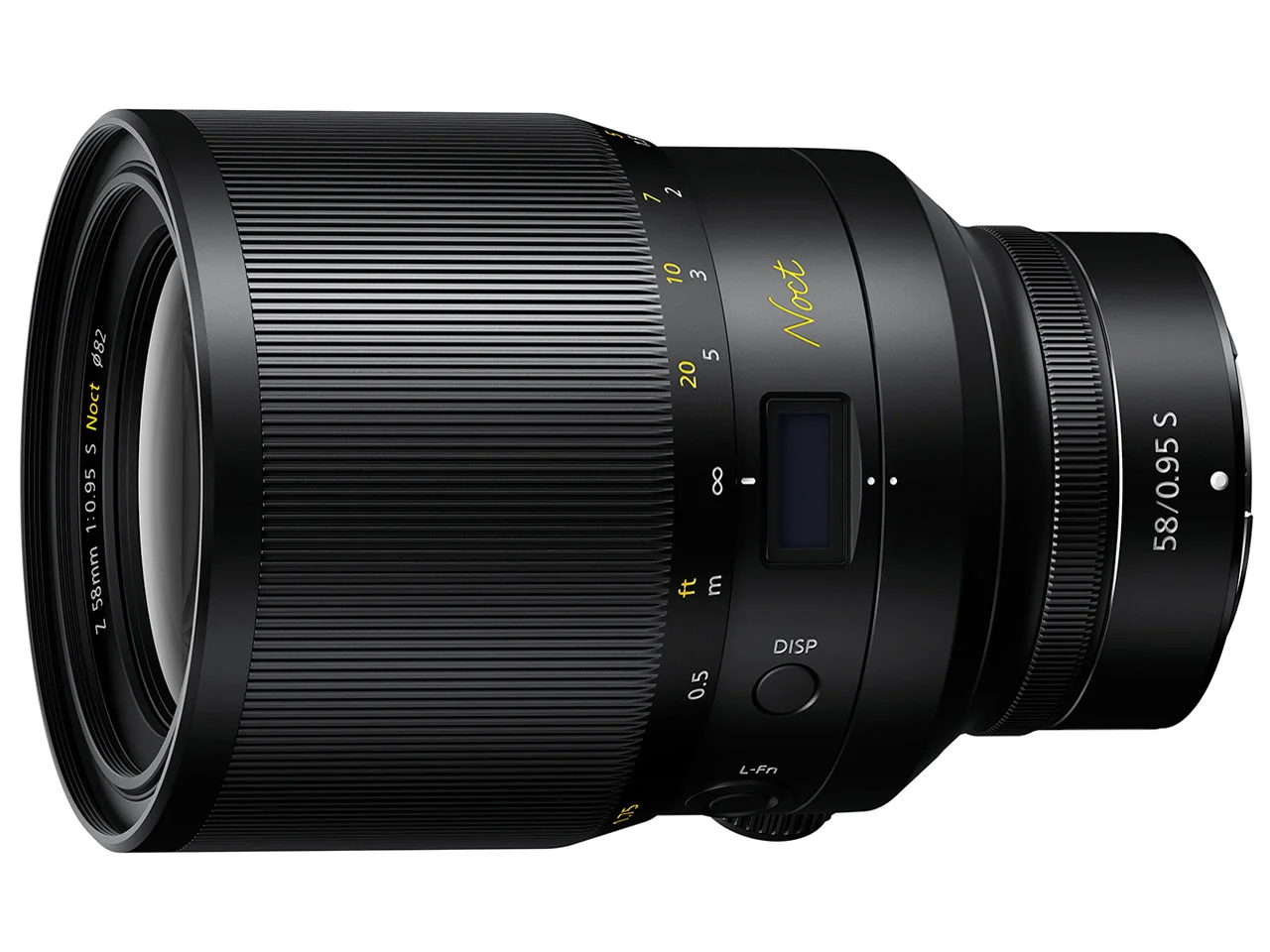
58mm sits close to the way the eye takes in a scene, which is why this range tends to get used as a general-purpose focal length.
The f/1 maximum aperture is about as fast as production lenses get: it gathers a lot of light and throws backgrounds well out of focus, at the cost of a depth of field thin enough that focus accuracy starts to matter on close subjects.
Size and filters
At 2000g (4.41 lb) this is a lens you plan around — it wants a larger body to balance against, and a tripod collar or monopod for extended use.
Filters are 82mm — worth checking against what you already own, since polarisers and ND filters at this size are reusable across any other lens sharing the thread.
Manual focus and stabilisation
Focus is manual only. That suits deliberate work — landscapes, macro, video pulls — and rules it out for anything that moves unpredictably.
There is no optical stabilisation in the lens, so handheld steadiness depends on the body having IBIS, or on keeping the shutter speed up.